Cincinnati Enquirer Archive
The archive below is a small collection of articles from The Cincinnati Enquirer referring to the Chem-Dyne disaster. The Cincinnati Enquirer, formerly known as the Phoenix (1828), later merged with the Daily Morning Message (1844) to eventually become what is now known as The Cincinnati Enquirer (1849). The Cincinnati Enquirer is the last remaining newspaper within the Greater Cincinnati area and is one of the largest cycling newspapers in Ohio. Each article below helps further contextualize the history of the Chem-Dyne disaster, representing the public outcry, environmental injustice, and bureaucratic disputes caused before and after the catastrophe.
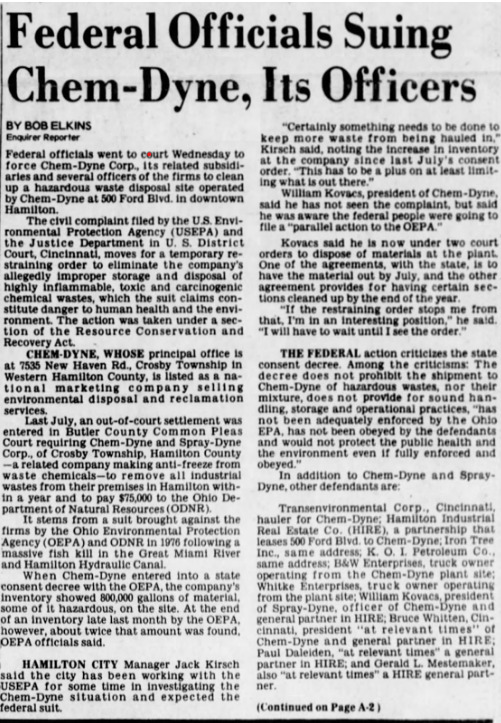
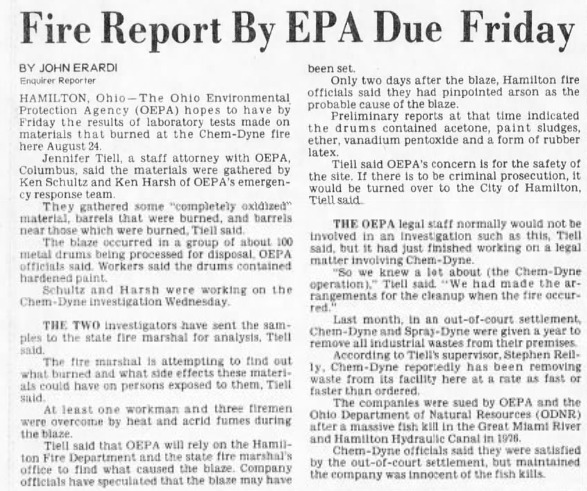
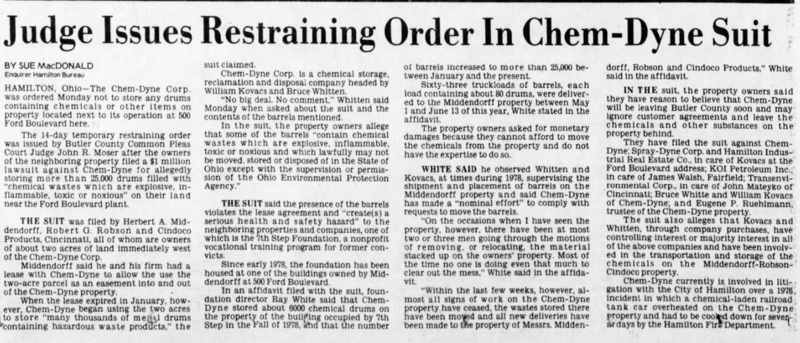
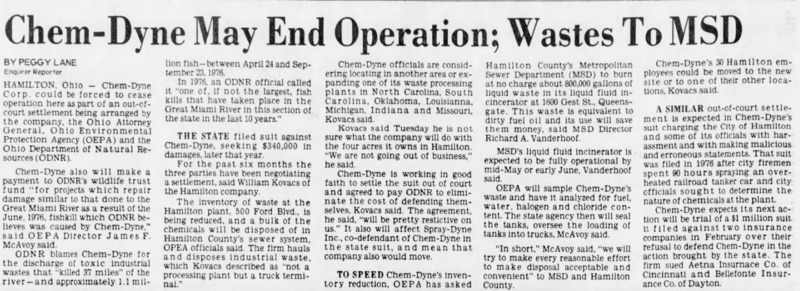
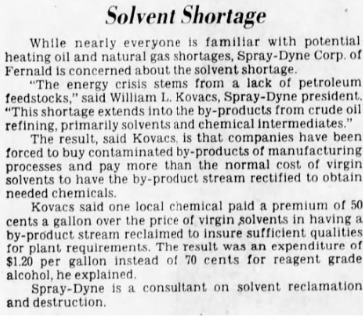
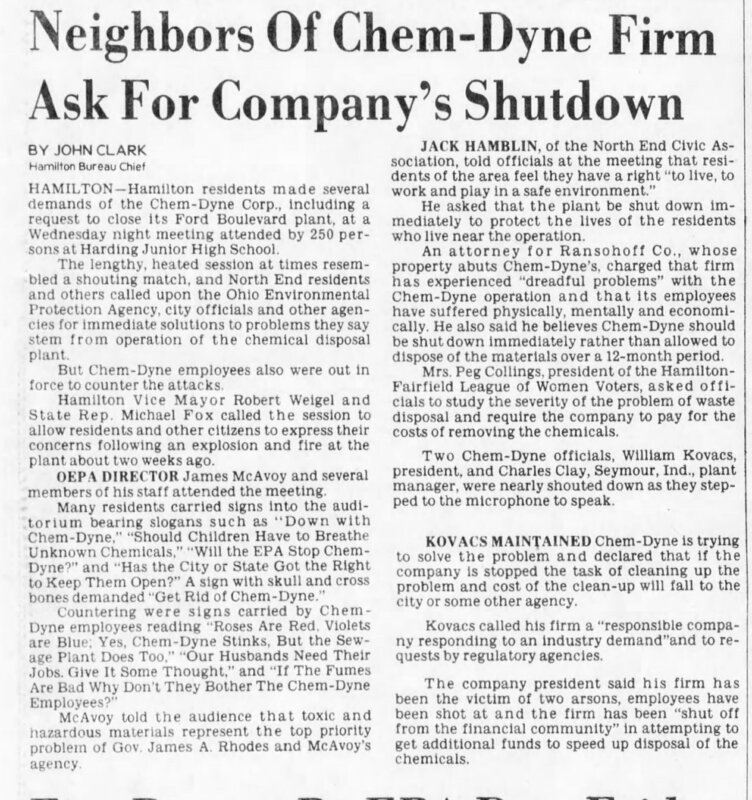
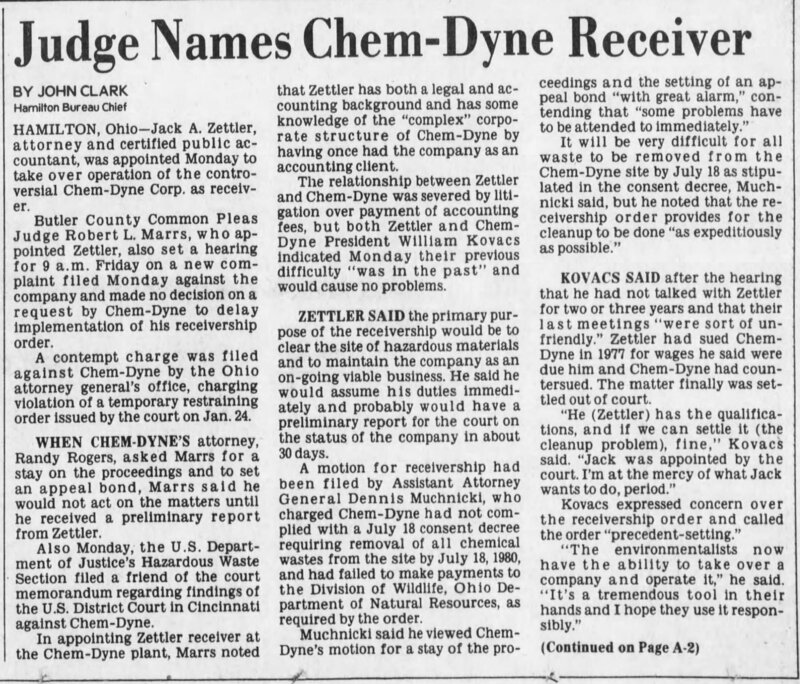
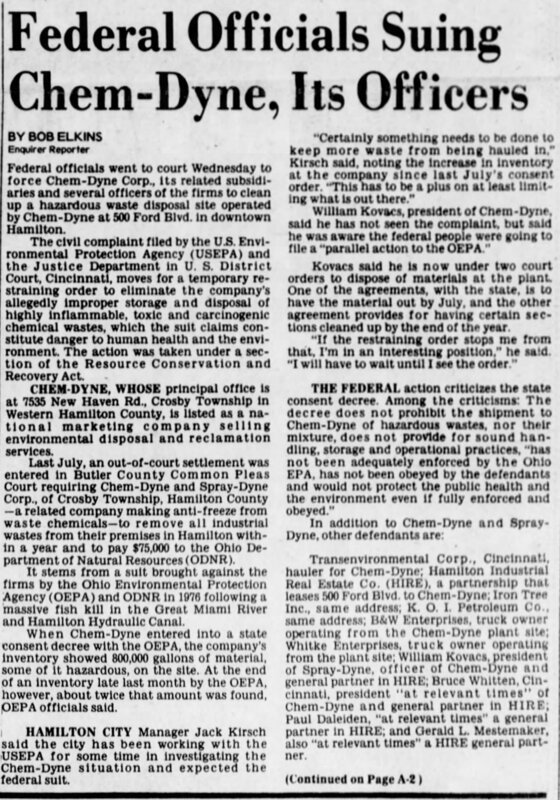
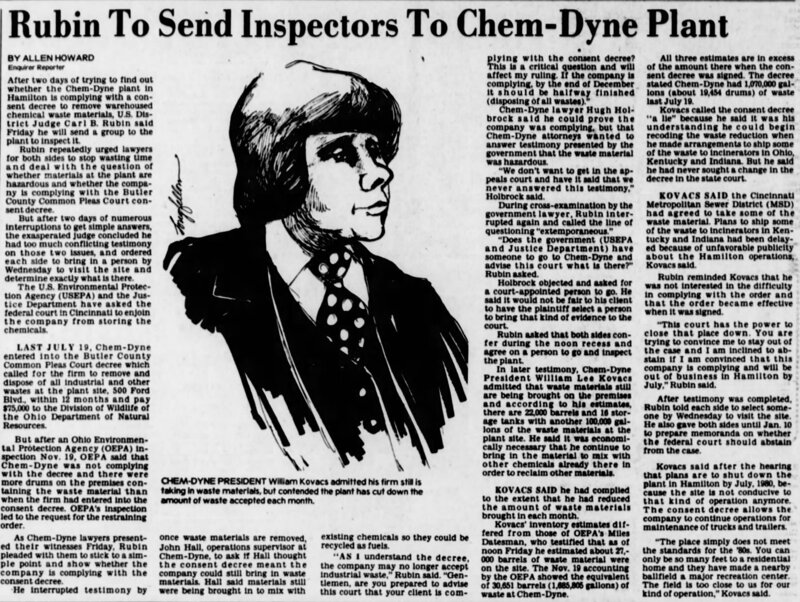
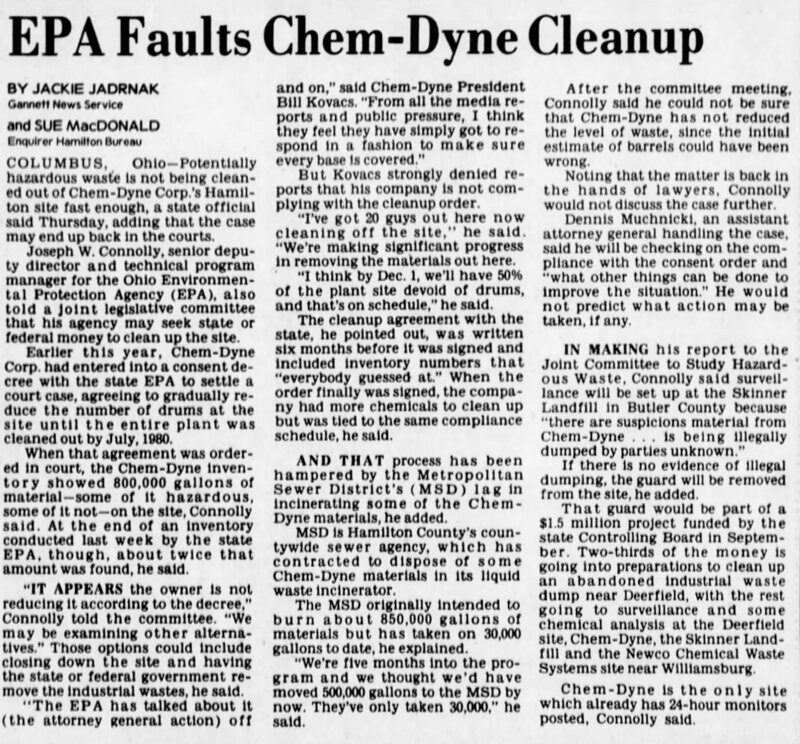
The first article within the archive, published on December 2, 1973, describes the then-named Spray-Dyne Corporation's interest in solving the solvent shortage that is causing an "energy crisis" within the Hamilton area, contextualizing that the crisis has led to other companies purchasing "contaminated by-products of manufacturing processes." Then, nearly six years later, on April 18, 1979, the now Chem-Dyne Corporation, was found committing environmental injustices, such as leaking of chemicals and chemical fires, and was told to end operations by the Ohio Environmental Protection Agency (OEPA). This was in reaction to state findings and subsequent filing of a court case against Chem-Dyne, which sought to gain 340,000$ due to environmental damages, for which Chem-Dyne was found accountable. Close to a month later, the legal saga continued when, on June 19, 1979, Chem-Dyne Corp. was issued a 14-day restraining order to cease any storage of chemical drums within the properties surrounding their operation. Furthermore, three months later, on September 6, 1979, another article was written on the battle between Hamilton residents and Chem-Dyne employees regarding the shutting down of the Corporation Ford Boulevard plant. On the following page, another article writes on the fire reports and material tests that were being conducted around the Chem-Dyne site by the OEPA. The last front-page article regarding Chem-Dyne was on December 7, 1979, when it was found that the quantity of chemical waste had increased by "615,805 gallons since the owners were ordered last July to clear the property."
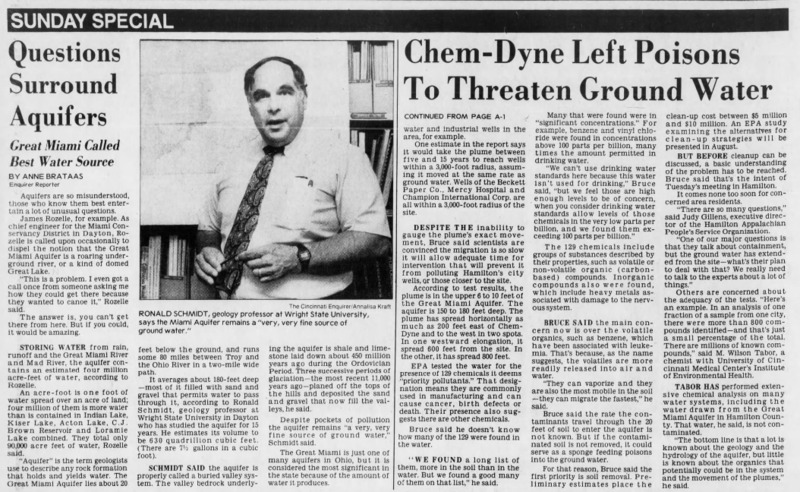
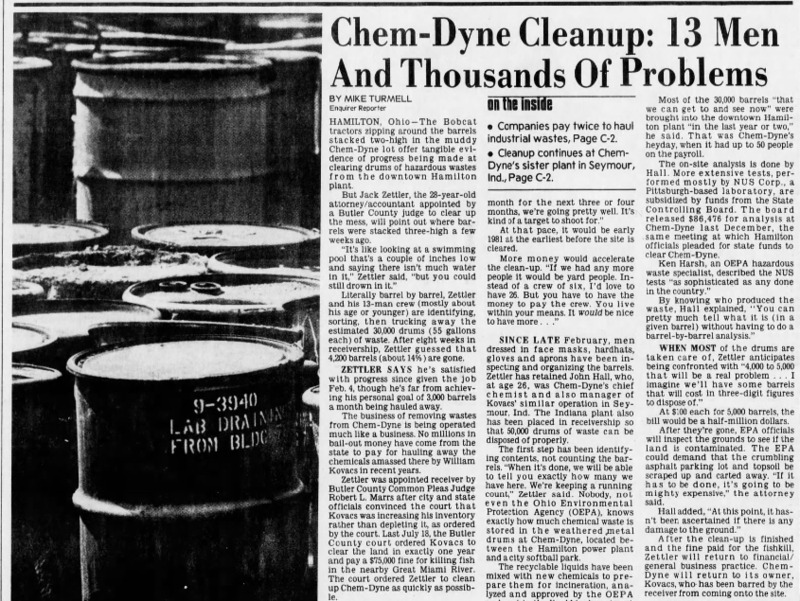
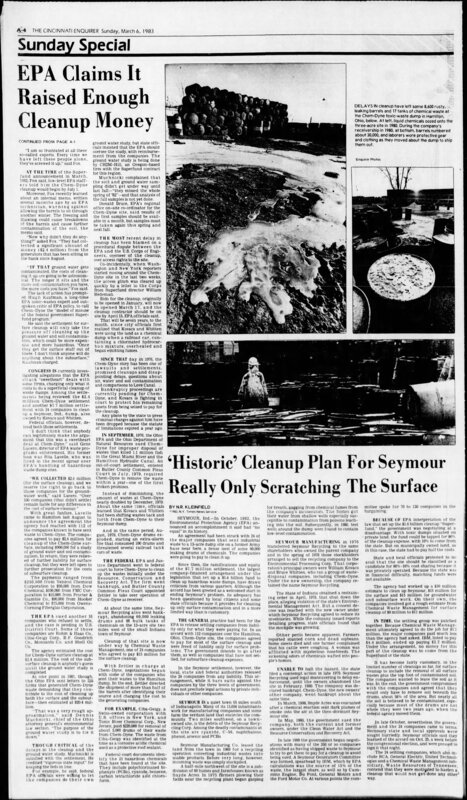
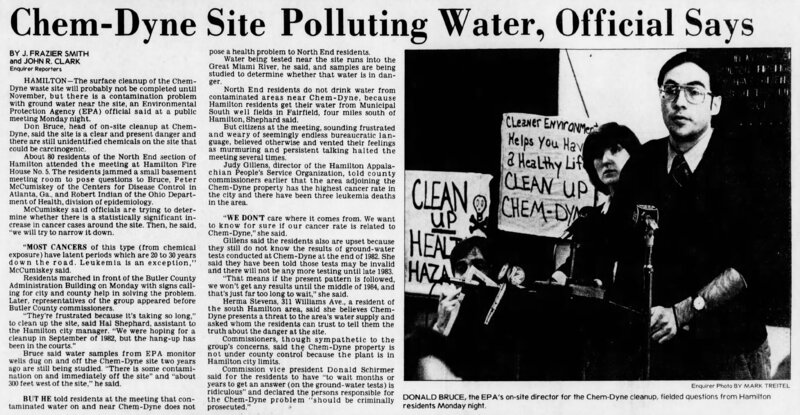
Fascinatingly, after 1979, the number of articles regarding the horrific environmental disaster that was the Chem-Dyne site dropped significantly, while there was some constant coverage, the amount of front page/ highlighted news on the situation surfaced once a year at best. On April 5, 1980, an article was written regarding the site cleanup operation, writing on the lack of manpower and available capital. Then on March 6, 1983, nearly three years later, another article was posted on the cleanup efforts by the United States Environmental Protection Agency (EPA) and the various bureaucratic disputes that have greatly slowed down and delayed cleanup efforts. Lastly, on June 10, 1984, an article was written on the poisons left behind and the threat they pose to the natural groundwater and aquifers. Other than these articles, the rest were only brief updates on the ongoing EPA investigation.
While this archive has a relatively small sample size, it exemplifies the Achilles heel within the news coverage of not only the Chem-Dyne disaster but news coverage in general. Only when there are quotable hot-button issues is there an article written about it on the front page, be that legal disputes or chemical leftovers. Then, as the public outcry and interest decline, there is a noticeable drop in coverage and interest. Moreover, there is a huge lack of focus on local perspectives and those affected, with the vast majority of articles focusing on either bureaucratic leaders or government institutions. When there is an article focusing on the local populace, they are segregated into small "on the inside" sections that are hidden deep within the paper.
All in all, this archive on the coverage of the Chem-Dyne disaster by the Enquirer is another example of how quickly life-altering events such as the Chem-Dyne disaster are dismissed and removed from the public consciousness. Moving forward, environmental injustices of this scale should be covered more holistically and explicitly by news agencies. Instead of jargon-filled EPA quotables and 24-hour news cycle headlines, there needs to be steps and procedures enacted to both educate the public and create barriers against similar catastrophes occurring in the future.